Solar Tax benefits
How Indian Businesses Save Tax with Solar Power
2026-02-20T00:00:00.000Z•8

Indian businesses installing commercial solar systems can claim 40% accelerated depreciation in Year 1 under Section 32 of the Income Tax Act, immediately reducing taxable income.
A ₹50 lakh commercial solar installation generates ₹20 lakh depreciation benefit, saving ₹5-6 lakh in actual taxes and reducing payback period from 5-7 years to 3-5 years.
Tax Benefit:
Claim 40% of solar installation cost as depreciation in Year 1 (60% if operational for 180+ days)
Who Qualifies:
Manufacturing units, factories, hotels, hospitals, IT parks, and commercial establishments (excludes residential installations)
Real Savings:
₹2 crore system = ₹1.2 crore Year 1 depreciation = ₹30-36 lakh tax savings
ROI Impact:
Accelerated depreciation improves payback period to 3-5 years and boosts ROI to 20-30% annually
Legal Framework:
Governed by Section 32 of Income Tax Act with 40% rate effective since April 1, 2017
Accelerated depreciation is a tax benefit that allows businesses to depreciate solar assets faster than standard plant and machinery.
Under normal circumstances, businesses depreciate assets at 15% annually. Solar installations qualify for a significantly higher rate of 40% in the first year under Section 32 of the Income Tax Act.
This higher depreciation rate creates immediate tax savings by reducing your taxable income substantially during the initial years of asset ownership.
For a manufacturing unit installing a ₹50 lakh solar system, this translates to claiming ₹20 lakh as depreciation in year one, directly lowering your tax burden.
Section 32 outlines the framework for calculating depreciation allowances on business assets.
Standard Depreciation Rate:
40% on Written Down Value (WDV) basis
Additional Depreciation:
20% extra if the asset operates for more than 180 days in the financial year
Combined Benefit:
Businesses can claim up to 60% total depreciation in year one when both provisions apply
The depreciation benefit falls under Section 32(1)(iia), which specifically addresses businesses engaged in power generation or manufacturing activities.
The Department of Revenue, Ministry of Finance, established the current 40% rate effective April 1, 2017, down from the previous 80% rate.

Eligibility is limited to specific business categories under Indian tax law.
(textiles, steel, chemicals, pharmaceuticals)
Industrial facilities with high power consumption
Commercial establishments operating as registered businesses
Hotels, hospitals, and
IT parks and corporate office complexes
Individual taxpayers and
do not qualify
for accelerated depreciation benefits.
The benefit applies exclusively to businesses using solar systems for commercial operations, not personal consumption.
Only new solar equipment qualifies. Pre-owned or second-hand installations are excluded from accelerated depreciation provisions.
For businesses evaluating installation options, learn more about rooftop solar systems versus ground-mounted installations to determine which maximizes your depreciation benefits.
Understanding the financial impact requires working through actual depreciation calculations.
Scenario:
Solar system cost: ₹40 lakhs
Business tax rate: 25%
System operational: More than 180 days in FY
Year 1 Calculation:
Base depreciation (40%):
₹40,00,000 × 40% = ₹16,00,000
Additional depreciation (20%):
₹40,00,000 × 20% = ₹8,00,000
Total depreciation claimed:
₹24,00,000
Tax savings:
₹24,00,000 × 25% = ₹6,00,000
This ₹6 lakh first-year tax saving substantially improves project payback period.
Scenario:
Solar installation: ₹2 crore
Corporate tax rate: 30%
Full-year operation
Year 1 Benefits:
Accelerated depreciation (40%):
₹2,00,00,000 × 40% = ₹80,00,000
Additional depreciation (20%):
₹2,00,00,000 × 20% = ₹40,00,000
Total depreciation:
₹1,20,00,000
Tax liability reduction:
₹1,20,00,000 × 30% = ₹36,00,000
The ₹36 lakh tax saving in year one significantly enhances cash flow for business operations.
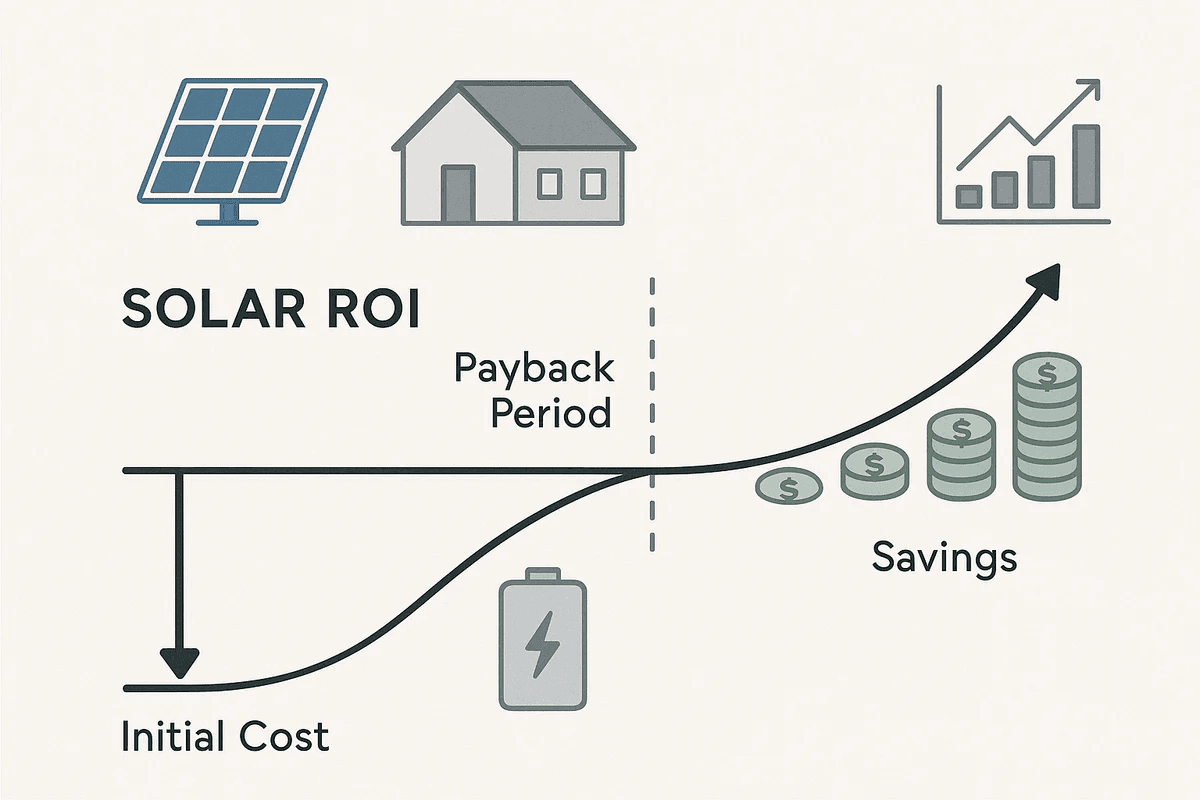
Accelerated depreciation dramatically improves solar investment economics.
A typical commercial solar installation recovers costs in 5-7 years through electricity savings alone.
When factoring accelerated depreciation tax savings, payback periods compress to 3-5 years.
Without depreciation benefits:
15-18% annual ROI
With accelerated depreciation:
20-30% annual ROI
The tax savings convert into additional working capital that businesses can redeploy immediately.
Proper documentation ensures smooth processing of depreciation claims.
Tax invoices for all solar equipment
Installation and commissioning certificates
Vendor GST registration details
System capacity specifications
Commissioning date certification
Performance test reports from certified agencies
Asset register entries showing solar installation
Depreciation schedule prepared by your CA
Board resolution approving capital expenditure
File depreciation claims in your annual Income Tax Return under the appropriate assessment year.
Maintain all supporting documents for minimum seven years as per Income Tax Act requirements.
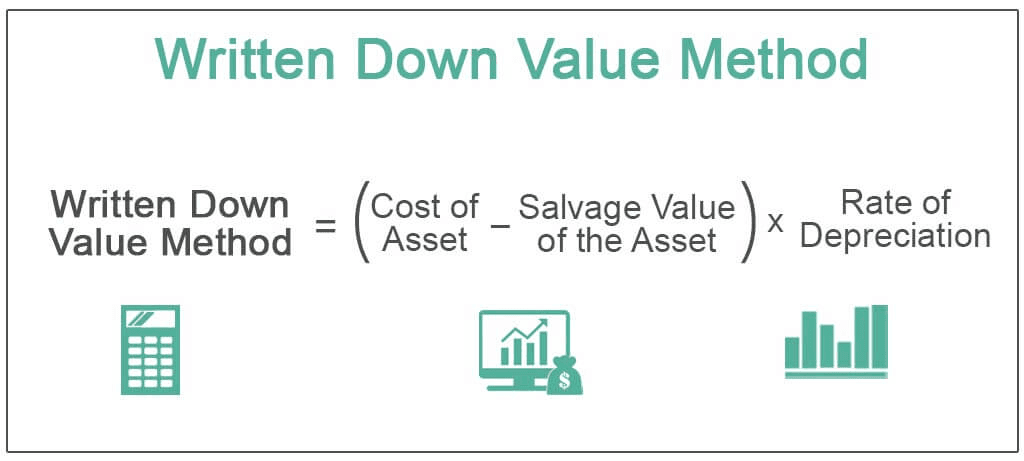
Solar assets use the Written Down Value (WDV) method for depreciation calculation.
Year 1: Depreciation calculated on original asset cost
Year 2 onwards: Depreciation applies to remaining asset value after previous year's depreciation
Initial investment: ₹50 lakhs
Year 1 depreciation (40%): ₹20 lakhs
Remaining value: ₹30 lakhs
Year 2 depreciation (40% of ₹30L): ₹12 lakhs
Remaining value: ₹18 lakhs
Year 3 depreciation (40% of ₹18L): ₹7.2 lakhs
Remaining value: ₹10.8 lakhs
This declining balance approach front-loads tax benefits when businesses need cash flow most.

Businesses can stack multiple financial benefits to maximize solar investment returns.
Claim full GST paid on solar equipment and installation as input tax credit, reducing overall project cost by 12-18%.
Earn credits for surplus electricity exported to the grid during low-consumption periods.
Solar installations contribute toward LEED and IGBC certification points, enhancing property value and corporate image.
Accelerated depreciation should integrate into broader capital allocation decisions.
The substantial first-year tax saving improves working capital position during the critical project implementation phase.
Plan equipment purchases to ensure systems become operational for more than 180 days in the financial year, unlocking the additional 20% depreciation.
Solar installations appear as fixed assets, improving your company's asset base while reducing tax liability.
The depreciation benefit enhances earnings before tax, strengthening financial ratios important for lender evaluations.
Several errors can result in claim rejections or delayed processing.
Mistake:
Installing systems late in the financial year
Impact:
Missing the 180-day threshold for additional 20% depreciation
Solution:
Plan installations for Q1 or Q2 of financial year
Mistake:
Incomplete commissioning certificates
Impact:
Tax authorities may question depreciation claims
Solution:
Engage certified agencies for proper documentation from day one
Mistake:
Clubbing solar assets with general plant and machinery
Impact:
Claiming wrong depreciation rates
Solution:
Maintain separate asset categories specifically for solar installations

The regulatory framework for solar tax benefits continues evolving.
The 40% accelerated depreciation rate remains in effect for commercial solar installations.
The Central Board of Direct Taxes (CBDT) has not announced any reduction plans for the current fiscal year.
State-level DISCOM schemes offer additional installation subsidies for commercial entities in select regions.
Some states provide property tax discounts for buildings with solar installations, creating additional savings beyond income tax benefits.
Present accelerated depreciation as part of a comprehensive financial justification.
Payback Period:
3-5 years with depreciation benefits vs. 5-7 years without
IRR (Internal Rate of Return):
Typically exceeds 22% when tax benefits are included
NPV (Net Present Value):
Remains positive across conservative discount rates when accelerated depreciation is factored
25-year panel warranties reduce technology risk
Fixed energy costs protect against 6-8% annual tariff escalation
Established legal framework under Income Tax Act provides policy certainty
As a comprehensive EPC provider, Earthwave ensures you capture the full financial value of solar investments.
Our financial modeling team works with your CFO to structure installations for maximum depreciation benefits.
We schedule commissioning timelines to meet the 180-day threshold for additional depreciation claims.
Earthwave provides all technical certifications, commissioning reports, and compliance documentation required for seamless tax filing.
Our CA-reviewed financial models give your tax advisors precisely formatted data for depreciation schedules.
We maintain detailed asset registers and performance documentation that support your annual tax filings throughout the system's operational life.
Accelerated depreciation transforms solar from an operational expense reduction into a strategic financial asset.
For businesses spending ₹5-50 lakhs monthly on electricity, the combined benefits of energy savings and tax reductions typically deliver 20-30% annual returns.
The 40% first-year depreciation benefit remains one of India's most valuable clean energy incentives for commercial enterprises.
Book a CFO Consultation:
Our financial team will calculate your specific tax savings and ROI based on your electricity consumption and tax profile.
Download Our Tax Calculator:
Get instant estimates of depreciation benefits for different system sizes.
Request a Feasibility Study:
Receive detailed financial modeling showing year-by-year depreciation schedules and cash flow projections.
Contact Earthwave Solar today to transform your electricity expense into a tax-efficient investment that delivers measurable returns for 25 years.
Disclaimer: This guide provides general information about accelerated depreciation benefits under current Indian tax laws. Tax implications vary based on individual business circumstances. Consult qualified chartered accountants and tax advisors for specific guidance applicable to your organization.
The current rate is 40% under Section 32 of the Income Tax Act, applicable on a Written Down Value (WDV) basis. If your solar system operates for more than 180 days in the financial year, you can claim an additional 20% depreciation, bringing the total Year 1 benefit to 60% of the installation cost. This rate has been in effect since April 1, 2017.
No, accelerated depreciation benefits apply exclusively to registered businesses and commercial entities. Individual taxpayers installing residential solar systems do not qualify for this tax benefit. Only manufacturing units, factories, hotels, hospitals, commercial establishments, and IT parks using solar for business operations are eligible.
With a ₹1 crore investment, you can claim ₹40 lakh as depreciation in Year 1 (or ₹60 lakh if operational for 180+ days). At a 30% corporate tax rate, this translates to ₹12-18 lakh in actual tax savings during the first year. Explore our projects portfolio to see real case studies of businesses achieving 3-5 year payback periods.
You need tax invoices for all equipment, installation and commissioning certificates, vendor GST registration details, system capacity specifications, commissioning date certification, and asset register entries. Your chartered accountant will prepare the depreciation schedule for inclusion in your annual Income Tax Return. Maintain all documentation for minimum seven years as per Income Tax Act requirements.
How Section 32 of the Income Tax Act Works
Yes, you can combine accelerated depreciation with other benefits. You can claim full GST input tax credit on solar equipment and installation (reducing project cost by 12-18%), earn net metering credits for surplus electricity exported to the grid, and qualify for green building certifications like LEED. These stacked incentives maximize your solar investment returns without any conflict.
Keyur Gajera is a solar energy professional with hands-on experience in commercial and industrial solar projects across India. He focuses on helping businesses understand solar economics, tax benefits, and long-term ROI through clear, data-driven insights. His work bridges the gap between technical solar implementation and financial decision-making for business owners and CFOs.
FAQS
Can't find the answer you're looking for? Our team is here to help.
SUBSCRIBE NEWSLETTER
Switching to solar is easier than you think. Let us guide you to cleaner, more affordable energy.
