Wave Inverters vs. Leading Brands
Wave Inverters vs Top Brands: 97% Efficiency Advantage
2026-02-23T00:00:00.000Z•8
Inverter efficiency directly determines how much solar-generated power becomes usable electricity for your business operations.
A 97% efficient inverter converts 97% of DC power into AC electricity, while the remaining 3% is lost as heat during conversion, directly impacting your bottom-line savings and payback period.
Every 1% efficiency gain translates to thousands of rupees in additional annual revenue for commercial installations
deliver 97-98.6% peak efficiency compared to traditional 70-75% PWM inverters, generating 20-30% more usable power
High-efficiency inverters accelerate ROI from 7 years to 5 years for typical commercial systems
Leading brands achieve 97-99% efficiency, but total cost of ownership varies significantly
Efficiency losses compound over 25-year system lifespans, making upfront inverter selection financially critical
When your solar system generates 100 kW of DC power, an inverter operating at 85% efficiency delivers only 85 kW of usable AC power. The 15 kW difference vanishes as heat, representing wasted capital investment and lost revenue opportunity.
For a 500 kW commercial installation running at 85% efficiency instead of 97%, you lose approximately 60 kW continuously during peak production hours.
Over a year, this translates to:
150,000+ kWh of wasted energy annually
Rs. 12-15 lakhs in lost savings at average commercial tariffs
Extended payback period by 18-24 months
Commercial solar systems typically achieve 18-30% annual ROI when properly configured. Inverter efficiency plays a disproportionate role in this calculation because conversion losses occur every single day for 25+ years.
A manufacturing facility spending Rs. 50 lakhs annually on electricity can expect:
3.2-year payback with 97%+ efficient inverters
4.5-year payback with 90% efficient inverters
Rs. 15 crore+ total savings differential over system lifetime
Brand Category | Peak Efficiency | European Efficiency | MPPT Efficiency | Typical Application |
Wave EWOS (5-25kW) | 98.6% | 98.2% | 99.9% | Commercial/Industrial |
Wave EWOS (3.6-6kW) | 98.1% | 97.5% | 99.9% | Small Commercial |
SolarEdge | 99% | 97.5% | 99.5% | Premium Residential |
Huawei | 98-99% | 97.8% | 99.0% | Large Commercial |
Tigo EI | 98.4% | 97.2% | 99.2% | Hybrid Systems |
Enphase IQ8+ | 97% | 96.5% | N/A | Microinverter |
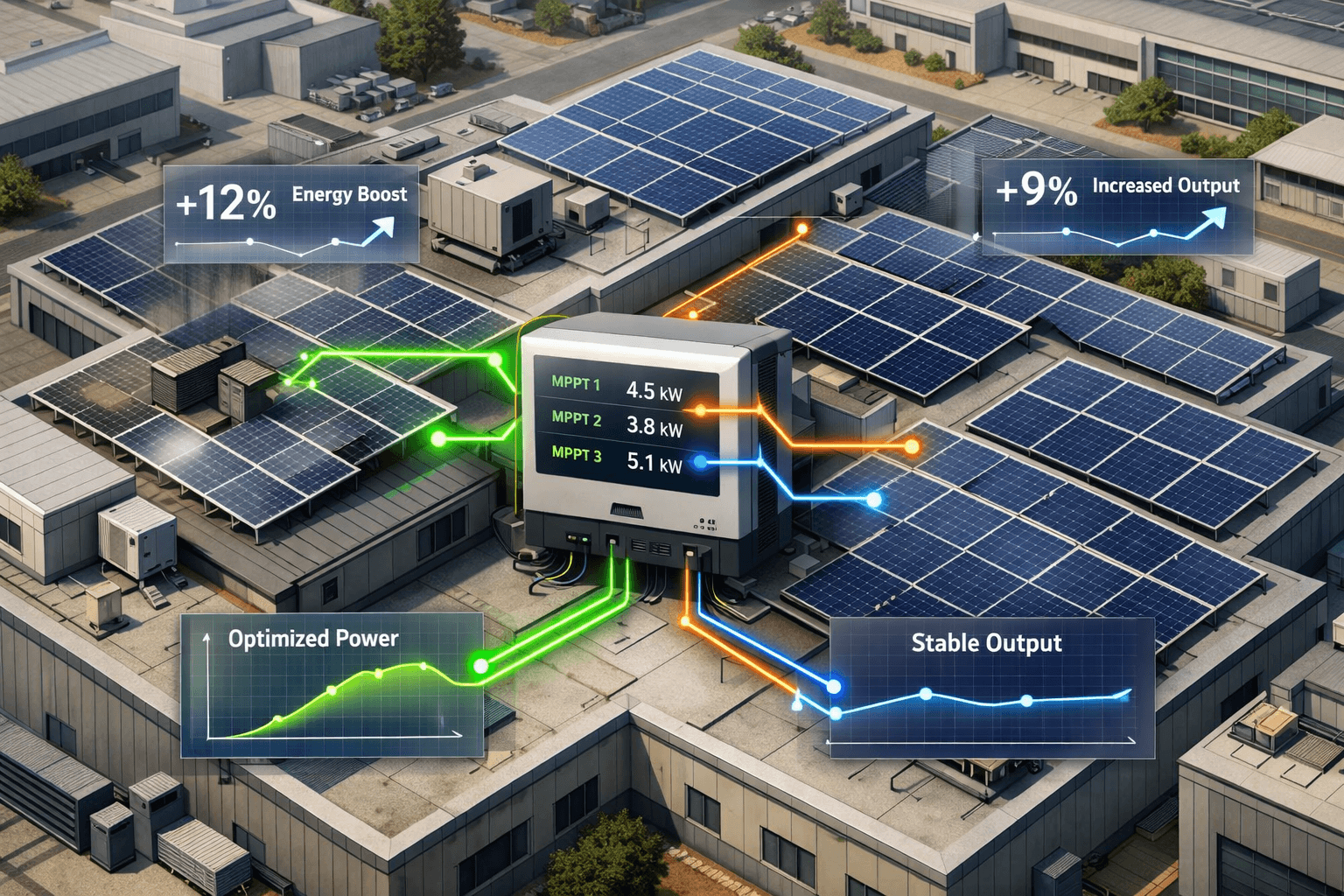
Commercial rooftops rarely offer uniform sun exposure throughout the day. Wave inverters incorporate 2-3 independent Maximum Power Point Tracking (MPPT) circuits in commercial models.
This architecture delivers:
Independent optimization for different roof orientations
Minimal performance loss from partial shading
5-15% additional energy harvest in variable weather conditions
Future-proof capacity for system expansion
Wave inverters begin operation at 60V (residential models) and 180V (commercial models), significantly lower than traditional inverters requiring 200V+.
Practical business impact:
45-60 minutes additional generation during early morning hours
Extended evening production window
Continued operation during overcast conditions
8-12% annual energy yield improvement in variable climates
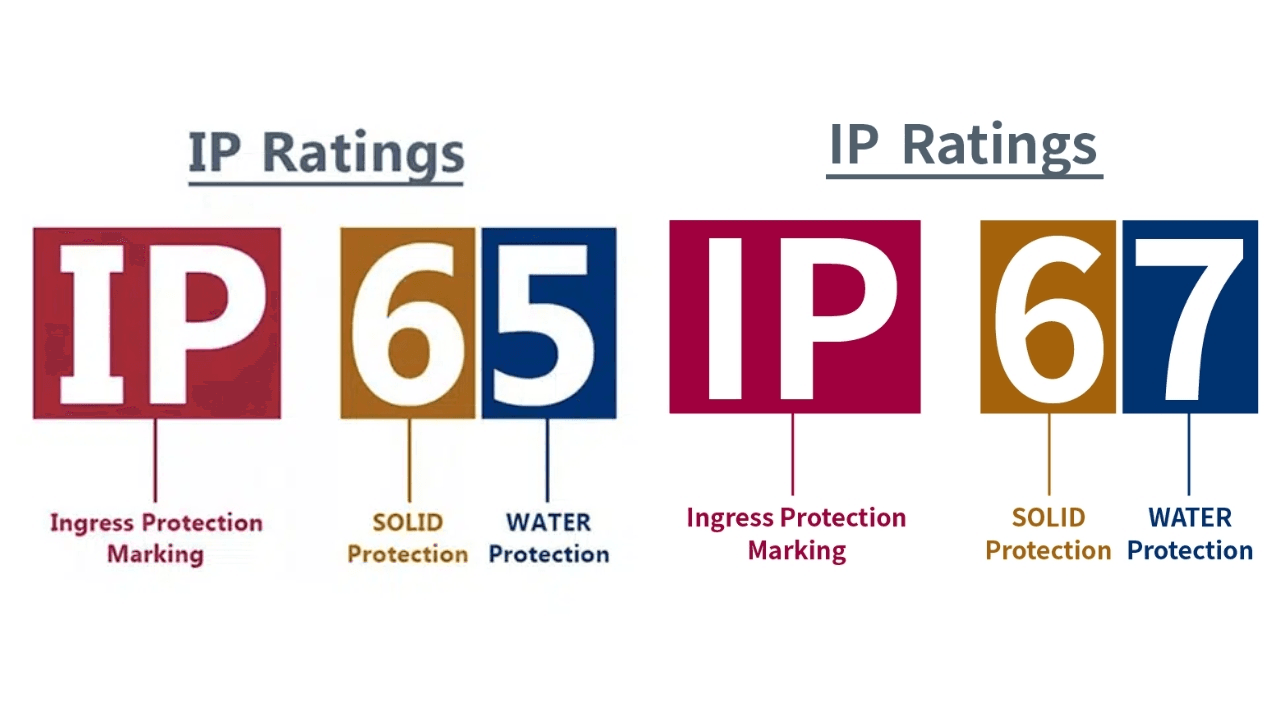
Manufacturing facilities, warehouses, and outdoor installations face dust, moisture, and temperature extremes. Wave inverters carry IP65 ingress protection rating, ensuring reliable operation in challenging conditions.
This translates to:
Reduced maintenance requirements
Lower lifetime operational costs
Minimal downtime in critical production environments
Extended equipment lifespan beyond 15 years
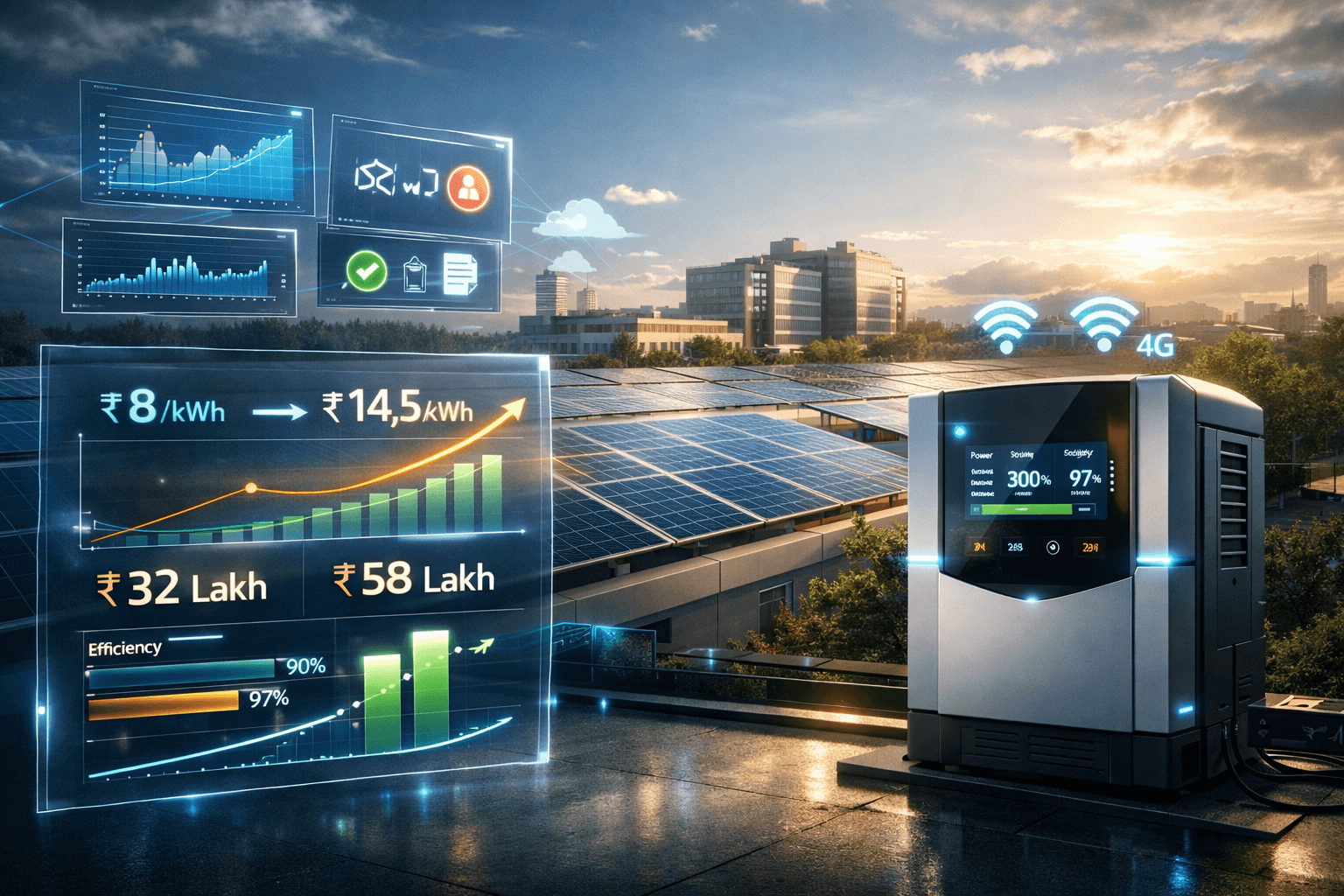
Commercial electricity rates have escalated 6-8% annually over the past decade. This inflation pattern makes every percentage point of inverter efficiency increasingly valuable as utility costs rise.
A system generating 400,000 kWh annually saves:
Rs. 32 lakhs at Rs. 8/kWh current rates
Rs. 58 lakhs at projected Rs. 14.50/kWh rates in 2031
The efficiency differential between 90% and 97% inverters grows proportionally
Modern commercial inverters integrate WiFi, LAN, and 4G connectivity for real-time performance monitoring. Wave EWOS series provides comprehensive system diagnostics through OLED displays and mobile applications.
Energy managers gain:
Live power generation visibility across multiple sites
Instant fault detection and remote diagnostics
Predictive maintenance scheduling
Performance benchmarking against weather-adjusted baselines
CFOs and sustainability officers require auditable energy data for Environmental, Social, and Governance (ESG) reporting. A 250 kW system displaces approximately 55 tonnes of CO2 annually.
Higher inverter efficiency means:
Verified emission reductions for regulatory compliance
Quantifiable sustainability metrics for stakeholder reporting
Enhanced corporate reputation and customer trust
Potential access to green financing at preferential rates
Wave inverters include standard manufacturer warranties, while premium international brands offer 12-25 year coverage. However, warranty replacement often requires system downtime and installation costs.
Consider:
10-15 year operational lifespan for quality inverters
Replacement costs including equipment, labor, and lost production
Availability of local service centers and spare parts
Technical support response times for commercial installations
Commercial solar installations frequently expand as businesses grow. Inverter selection impacts scalability through:
Compatibility with additional strings and panels
Battery integration capabilities for hybrid systems
Grid compliance certification for evolving utility requirements
Software update capabilities for changing regulations
When presenting inverter options to financial decision makers, focus on:
Internal Rate of Return (IRR):
High-efficiency inverters deliver 20-22% IRR versus 15-18% for standard models
Net Present Value (NPV):
Efficiency gains create positive NPV across all reasonable discount rates
Post-Payback Energy Costs:
After system payback, energy costs drop to Rs. 0.50/unit for remaining 20+ years
System integrators evaluating inverter brands for commercial projects should assess:
Bankability and financing acceptance by lenders
Track record in similar-scale installations
After-sales service infrastructure
Compliance with local grid codes and safety standards
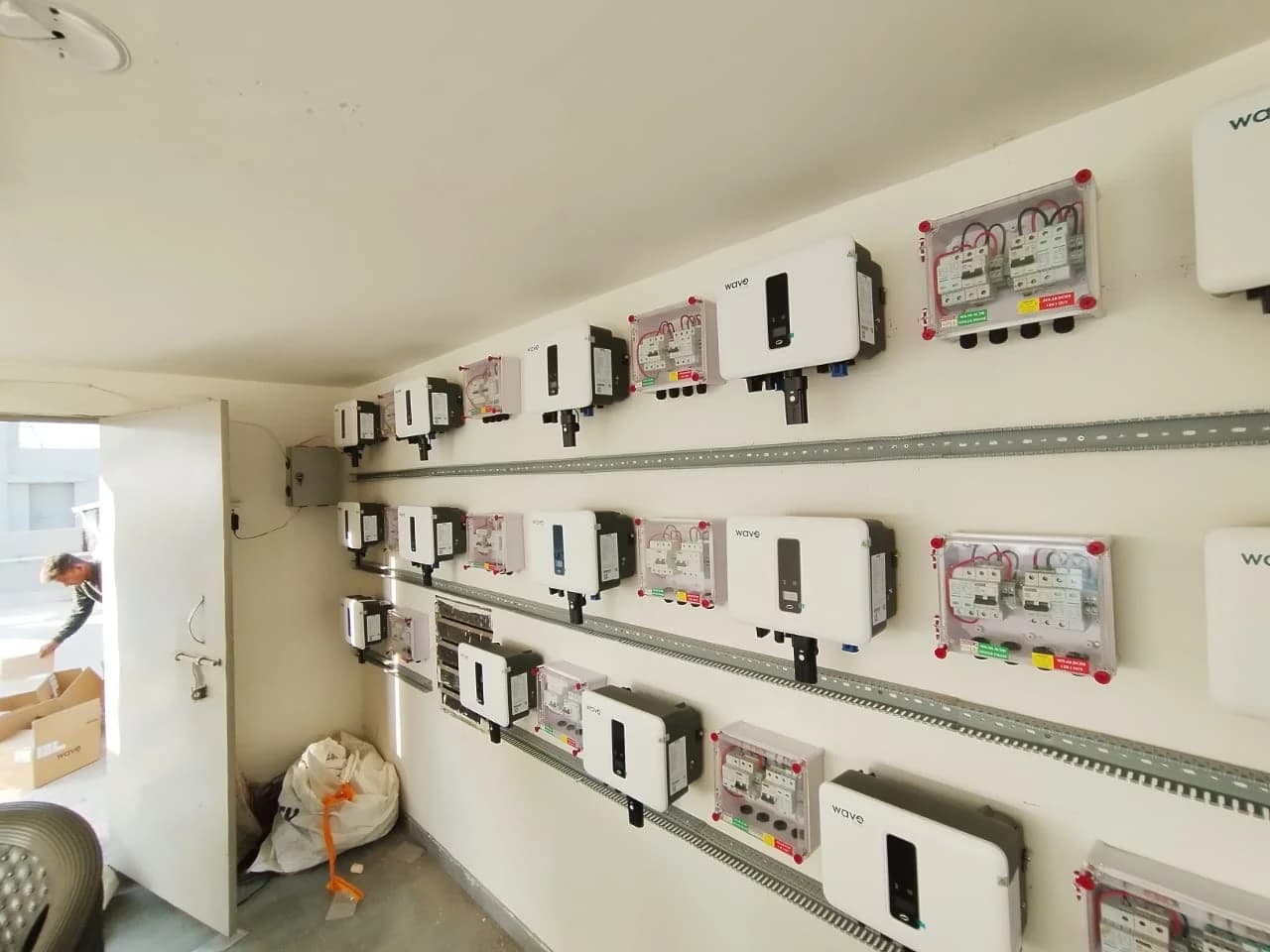
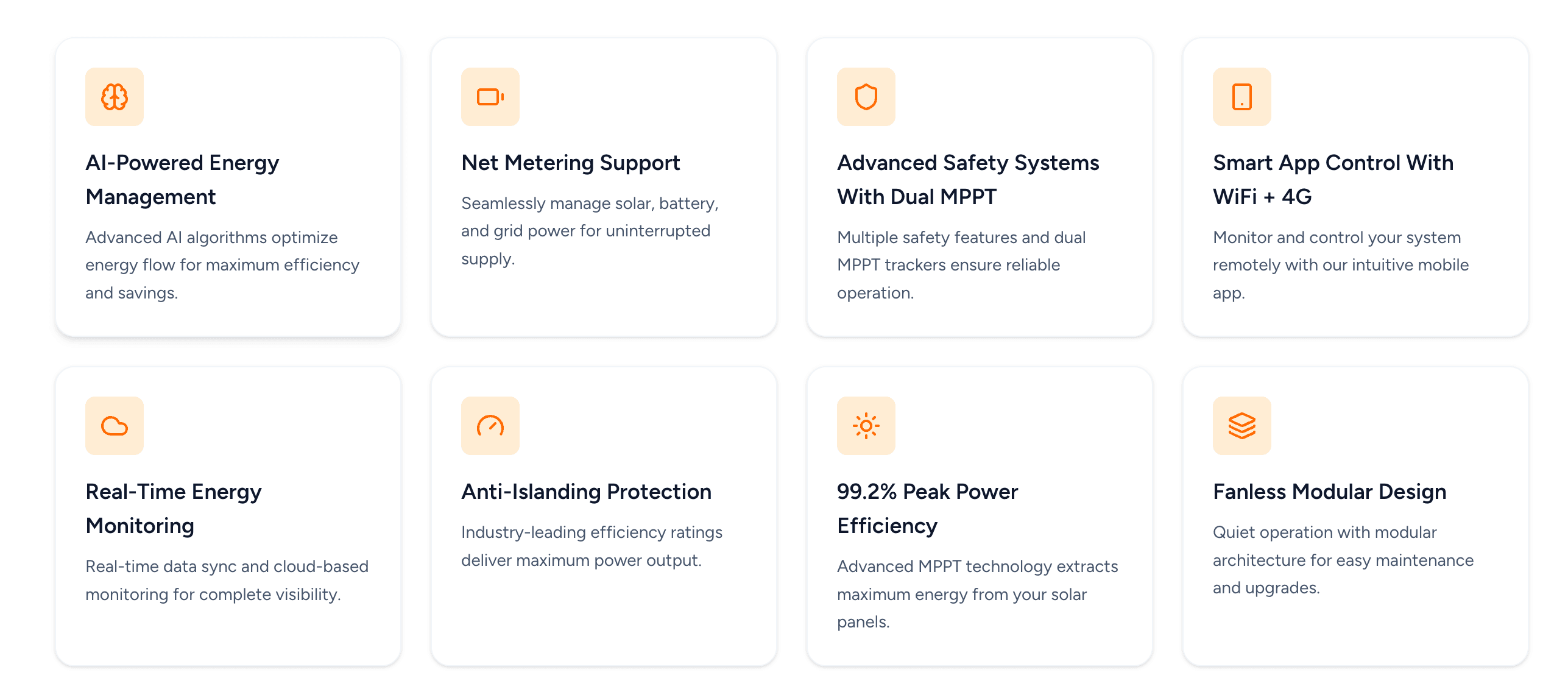
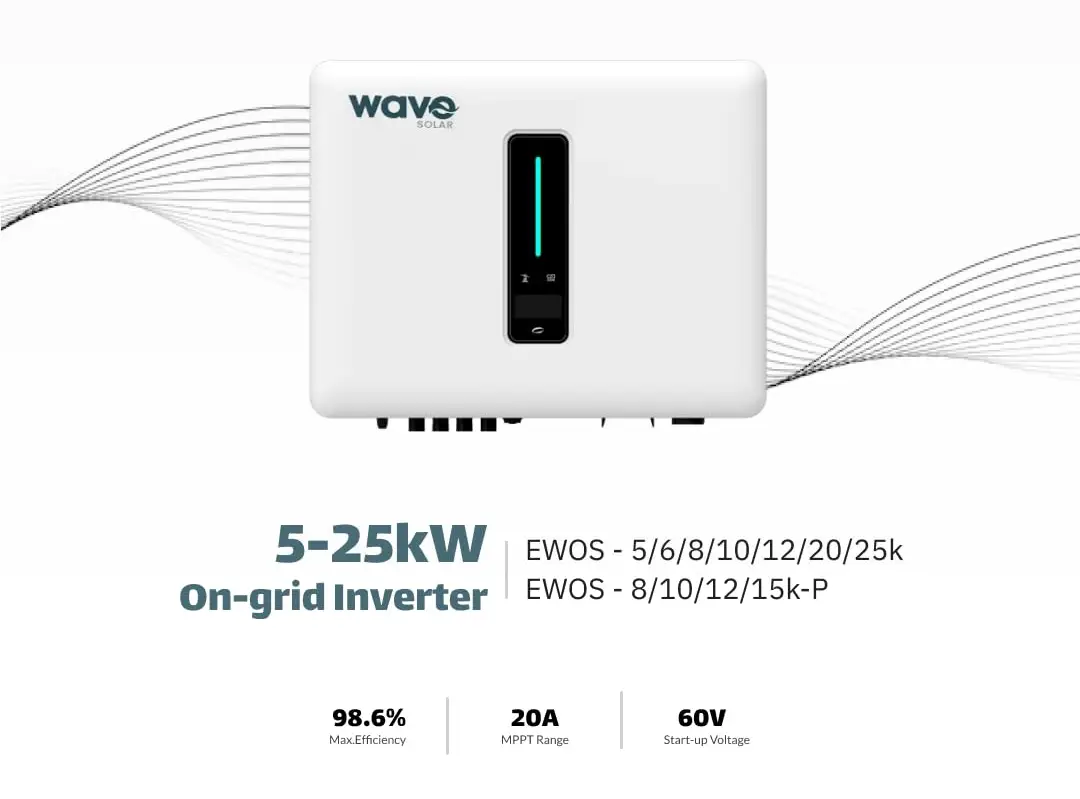
Wave Solar manufactures high-performance on-grid inverters specifically engineered for Indian commercial and industrial applications. As an Earthwave product, Wave inverters combine advanced technology with local manufacturing advantages.
Commercial Three-Phase Models (5-25kW):
98.6% maximum efficiency with 98.2% European weighted average
2-3 independent MPPT trackers for complex roof layouts
180V start-up voltage for extended daily generation
Operating voltage range 160-950V accommodating various panel configurations
IP65 protection for harsh industrial environments
Installation and Support Benefits:
Plug-and-play terminals reducing installation time and costs
OLED display with WiFi/LAN/4G monitoring options
Transformerless topology reducing weight and improving reliability
Natural convection cooling eliminating fan maintenance (up to 12kW models)
Comprehensive protection systems including anti-islanding, surge protection, and over-temperature safeguards
Earthwave Solar provides complete EPC services including system design, professional installation, and ongoing support for rooftop, ground-mounted, and industrial solar projects.
Contact Earthwave Solar for a free technical consultation on Wave inverter solutions tailored to your commercial energy requirements.
Our engineering team conducts comprehensive site assessments, energy audits, and financial modeling to demonstrate precise ROI projections for your facility.
A 100kW system at 97% efficiency delivers 7kW more usable power than a 90% efficient inverter. Over a year, this translates to approximately 17,500 kWh additional generation, worth Rs. 1.4-1.75 lakhs annually at commercial tariff rates.
Yes, inverter replacement is feasible if the new unit matches voltage specifications and panel configuration. However, consider downtime costs, installation expenses, and compatibility with existing monitoring systems before proceeding.
Specify minimum 97% peak efficiency and 97% European efficiency for commercial projects. Include MPPT efficiency above 99.5% and require IP65 protection for industrial environments to ensure long-term performance.
Higher efficiency inverters compensate for panel degradation by maintaining near-rated capacity output even as panels lose 0.5-0.7% efficiency annually. This effectively future-proofs the system and preserves ROI throughout the operational lifespan.
Quality inverters like Wave EWOS series use natural convection cooling up to 12kW capacity and operate reliably in ambient temperatures from negative 30°C to positive 60°C without special ventilation requirements
FAQS
Can't find the answer you're looking for? Our team is here to help.
SUBSCRIBE NEWSLETTER
Switching to solar is easier than you think. Let us guide you to cleaner, more affordable energy.
